TA00035AHH
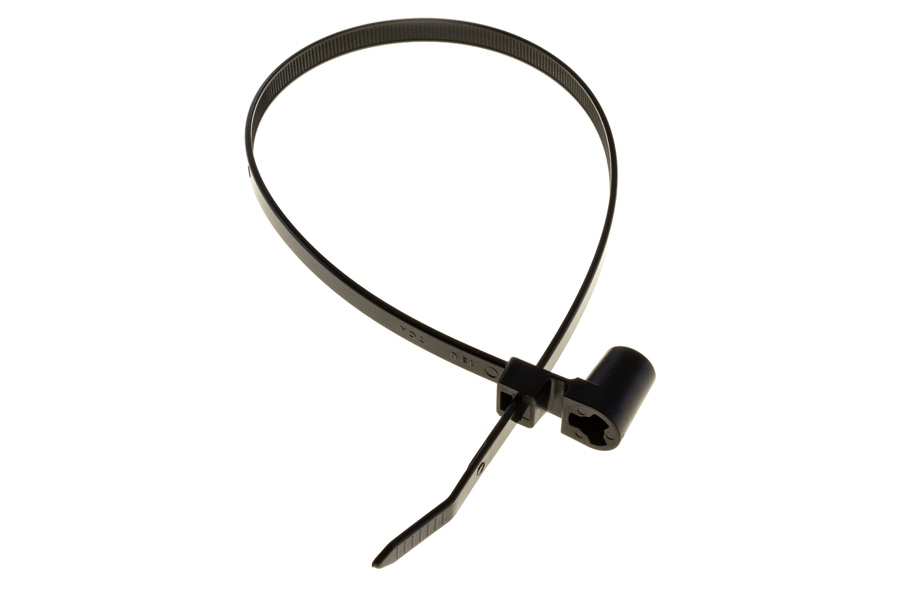
Introducing the 1/4-20x16.00 Stud Mount Tie Strap, part number TA00035AHH, designed to meet the precise needs of your automotive assembly processes. This robust cable tie, sourced by Facil, boasts a generous length of 407mm, providing ample capacity for bundling multiple cables and wires securely. Constructed from durable PA66 material, it withstands wear, heat, and vibration, ensuring long-lasting performance even in challenging environments.
The stud mount feature, compatible with a 1/4 screw, offers secure installation without additional hardware, streamlining your assembly process. Its black finish adds a sleek touch to your projects, seamlessly integrating into various vehicle interiors. With a width of 7.7mm and a uniform bundle diameter of 101.6mm, it efficiently manages cables with precision. Each box contains 600 units, making it ideal for large-scale applications while also accommodating smaller production runs.
Whether securing wires in a vehicle or organizing cables in an industrial setting, this tie strap delivers reliability and ease of use. Choose the TA00035AHH for your next project and experience the blend of quality and functionality that Facil products are known for.
Beyond its practical applications, this tie strap is engineered to provide consistent performance, reducing the need for frequent replacements and maintenance. Its design ensures that cables stay firmly in place, minimizing potential disruptions and enhancing overall system reliability. This makes it an essential component for engineers and manufacturers looking to optimize their assembly processes.